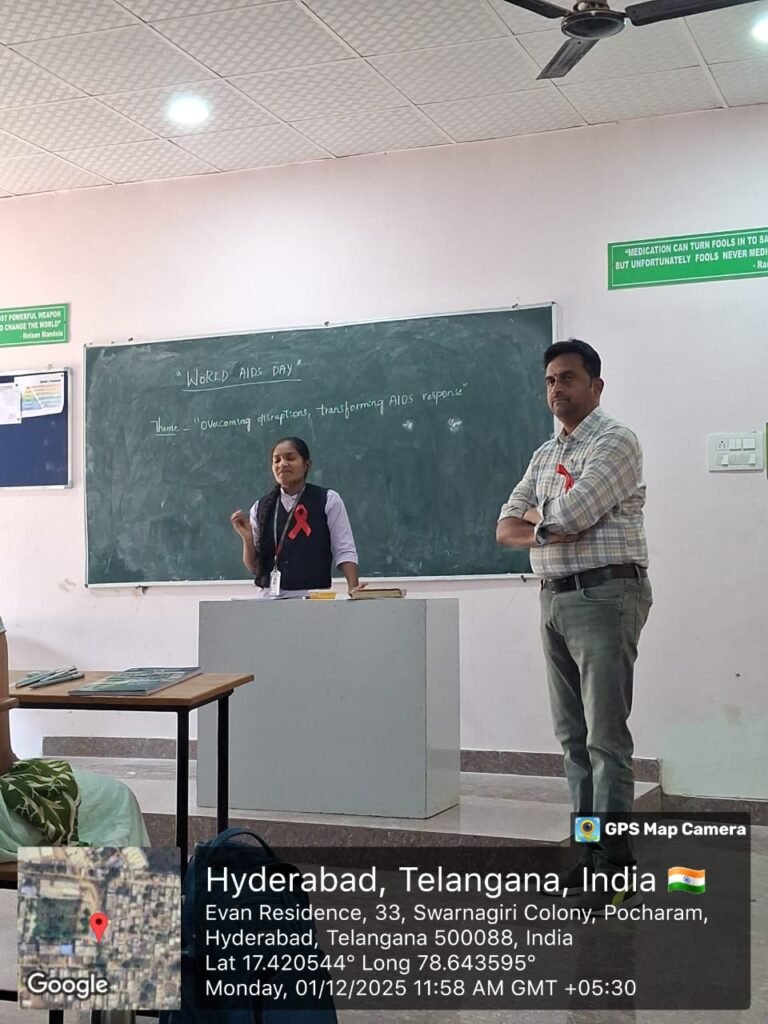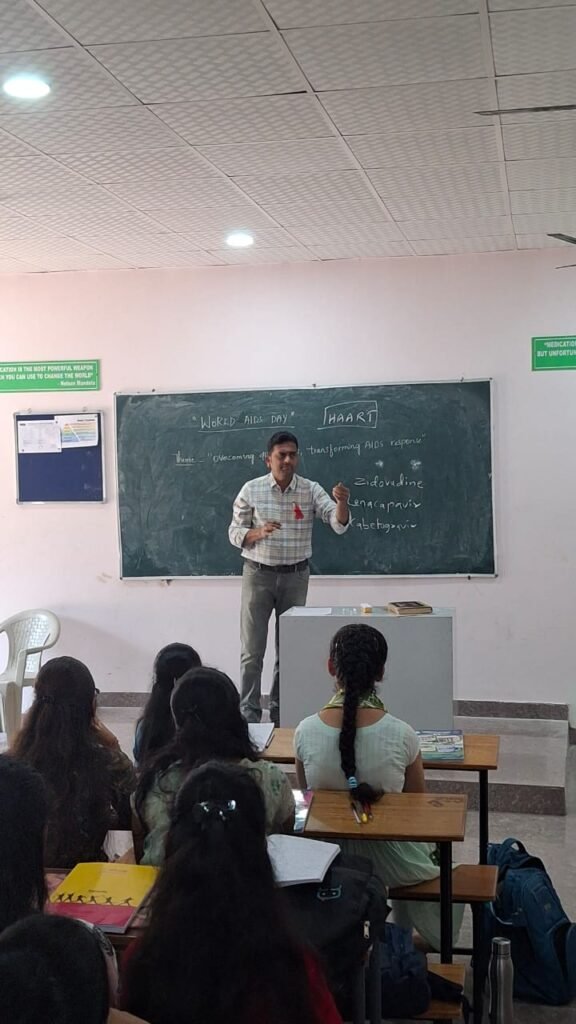

World AIDS Day was observed on 1st December 2025 at the Seminar Hall of Princeton College of Pharmacy with the primary objective of creating awareness among students about HIV/AIDS, its modes of transmission, prevention strategies, and the importance of early diagnosis and timely treatment. The programme was organized to educate future healthcare professionals about the medical, social, and ethical aspects of HIV/AIDS, while reinforcing the need for empathy and responsibility in patient care.
The session highlighted the global and national scenario of HIV/AIDS and emphasized that, with proper awareness, preventive measures, and access to treatment, the disease can be effectively managed. Students were informed about the importance of safe health practices, regular screening, and adherence to antiretroviral therapy (ART) in improving the quality of life of individuals living with HIV. Special focus was given to the role of early diagnosis in reducing disease progression and preventing further transmission.
A key message of the programme was the urgent need to eliminate stigma and discrimination associated with HIV/AIDS. Speakers addressed common myths and misconceptions, encouraging students to adopt a compassionate, non-judgmental approach toward affected individuals. The discussions underscored that stigma often acts as a major barrier to testing and treatment, and healthcare professionals play a crucial role in creating a supportive and inclusive environment.
Students were sensitized to their responsibility as future pharmacists and healthcare providers in spreading accurate information, counseling patients, and actively supporting public health initiatives. The programme motivated students to act as awareness ambassadors within their communities, promoting prevention, respect, and understanding.
The observation of World AIDS Day at Princeton College of Pharmacy served as a meaningful platform for learning, reflection, and social commitment. It reinforced the institution’s dedication to community health education, ethical healthcare practices, and public awareness, while inspiring students to contribute positively toward building a healthier, stigma-free society through knowledge, empathy, and professional integrity.